Anxiety is disrupting your sleep: Here’s how to fix it
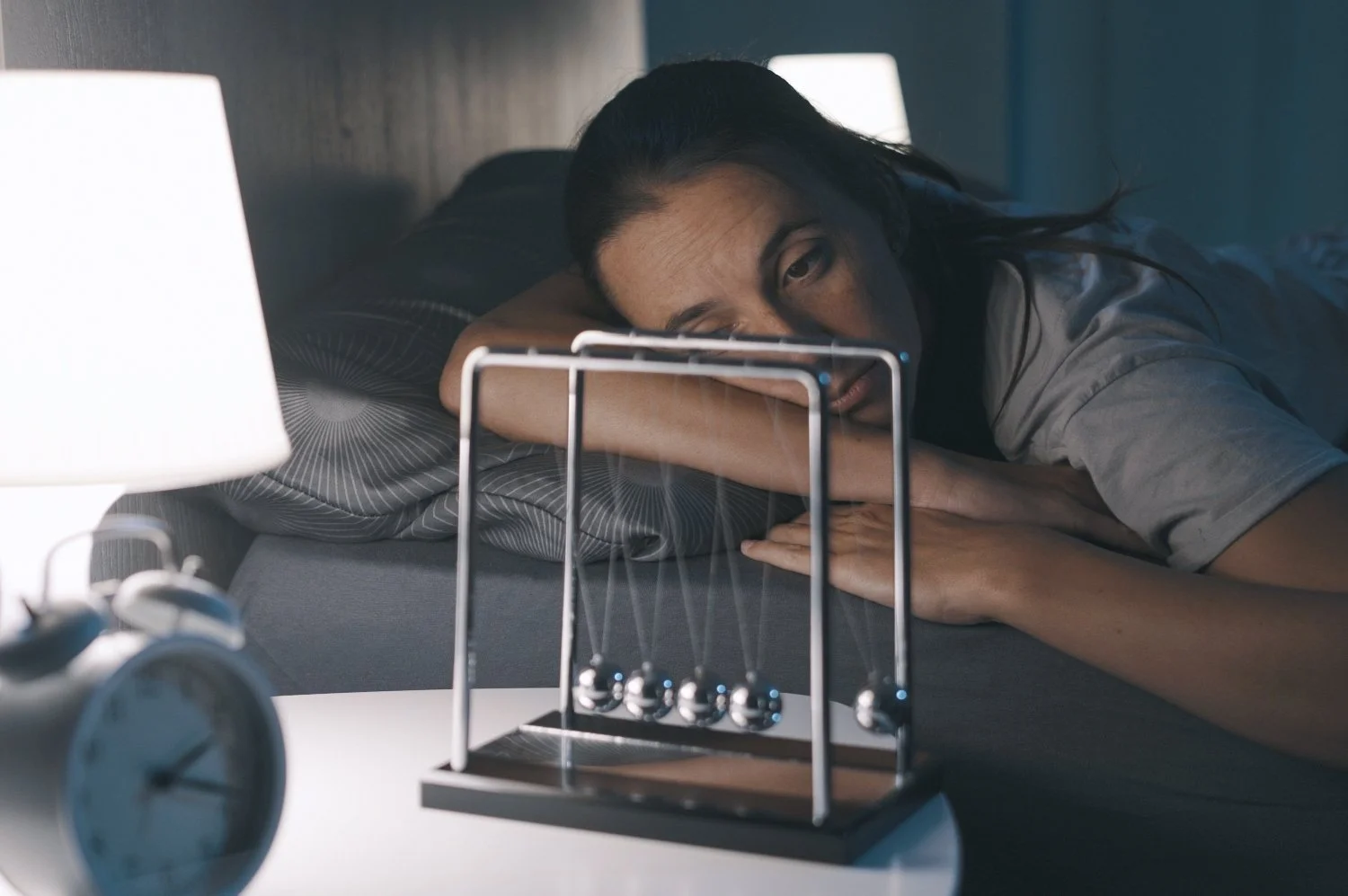
Did you know we spend one-third of our lives sleeping (or attempting to do so)?
Given that fact, it would seem that sleep is meant to be effortless—something the body knows how to do on its own—and yet, for many people, night after night, it becomes a struggle.
You lie down feeling exhausted, only to find your mind alert and busy. Your eyes are closed, but your thoughts are looping as your monkey mind keeps chattering. You toss and turn, becoming more and more anxious about not being able to fall asleep. This leads to even greater anxiety as you start to anticipate how tomorrow will feel if sleep doesn’t come soon.
Does this resonate with you?
For those living with anxiety, insomnia is more than “not sleeping” but rather a nervous system that doesn’t feel safe enough to completely switch off. That’s why taking steps to promote good, restorative rest is essential to overall wellness.
According to Robert Satriale, MD, FAASM, a sleep medicine specialist at Temple University, “Up to one in three Americans experience insomnia at some point each year, and a third of them suffer on a nightly basis.”
If anxiety is causing you insomnia and ruining your sleep, it’s time to take charge. With the right sleep hygiene, you can improve sleep quality and achieve deep rest.
Why anxiety and insomnia are so closely connected
Anxiety activates the body’s stress response. This response exists to protect us, boosting our awareness of potential dangers and keeping us ready to respond to perceived threats. Anxiety can keep us safe, but also keep us in a heightened state of alertness.
Sleep requires the opposite state.
In order to fall asleep, the body needs to feel safe enough to let down its guard. However, when anxiety is present, the nervous system remains on high alert even when the body is tired and ready to rest. The mind continues scanning, planning, ruminating, and worrying.
Night after night, the same pattern emerges, making falling asleep difficult and staying asleep even harder. This is insomnia.
When sleep becomes a source of anxiety
Once sleep becomes inconsistent, many people begin to worry about it even more. You pick up your phone to check the time, track the hours, and brace yourself for the consequences of another poor night's sleep.
When this starts to happen, your bed and sleep stop feeling like comfort and rest and more like a chore or challenge.
According to clinical psychologist Steve Orma, a specialist in insomnia treatment, the fear of not being able to sleep or getting good sleep is a phenomenon called “sleep anxiety”, which is driven by the fear of not sleeping. The more you focus on it, the less likely you are to sleep, which then makes you more anxious. It’s an endless cycle.
The more pressure you place on yourself to fall asleep, the more alert the body becomes and the more it resists resting.
Ironically, just “trying harder” to sleep often makes it less likely to happen. For many people, better sleep hygiene is the key to fixing their anxiety and insomnia.
What is sleep hygiene?
The clearest guiding principle for good sleep hygiene is to only use your bed only for the three “S’s”: sleep, sickness, or sex, because the more you use your bed for anything else, the harder it is for your body to associate the bed with rest.
But sleep hygiene is much more than that. Often misunderstood as a strict set of rules, good sleep hygiene refers to the daily habits and environmental cues that support your body’s natural rhythms.
So rather than focus on just what you shouldn’t do at night:
No screens
No working in bed
Don’t fall asleep with the TV on
Create a perfect sleep routine every evening
It’s better to focus on how the day unfolds as a whole.
For example:
Do you get regular light exposure in the morning? This could be from natural sunlight or a speciality sun lamp.
What about predictable mealtimes? Are you indulging in alcohol or sugar at night? These are natural disrupters to your sleep cycles.
How much movement are you getting during the day? Regular movement can greatly improve sleep quality.
Is your bedroom a cool, peaceful place to relax, or is it messy and distracting? A bedroom that signals darkness and quiet is scientifically proven to help you sleep.
All of these things add up and help the nervous system recognise when it is time to be alert and when it’s time to rest.
The most important thing to remember is that consistency is key.
If there are days you go to bed late or get little sleep, it can feel like you “deserve” to take a nap or sleep in on the weekend. However, as great as it feels to sleep in, our circadian rhythms don’t tolerate the disruption, and it can contribute to poor sleep performance. Regardless of how you slept the night before, waking up and going to sleep at the same time every day will help maintain your sleep schedule, as your sleep drive will naturally build throughout the day. This means the following night, you’ll be ready to go to bed at a reasonable time.
Without good sleep hygiene habits... well, you could end up tossing and turning all night instead of resting.
Wind-down time
For some people, the idea of a strict bedtime or wake-up time creates even more pressure and anxiety. In this case, a structured wind-down period is often far more helpful as the goal is not to fall asleep immediately but to create conditions that make rest more likely.
What does that look like?
Keeping an evening journal to express your thoughts
Doing a 10-20 minute bedtime yin yoga to calm the mind and relax the body
Taking a warm bath with calming essential oils has been scientifically proven to help you get to sleep more quickly
Investing in comfortable bedding, pillows and blackout shades to block ambient or morning light
Using good earplugs or a sound machine if you’re sensitive to noise
Reading a book before bed instead of watching TV
Writing out tomorrow’s to-do list so you can clear your mind
If that all sounds like a lot to keep up with, focus on trying one or two things at a time. Dr Luke Allen, who specialises in anxiety, says, “Trying to make drastic changes to one’s sleep routine all at once can be challenging and overwhelming, which can lead to frustration or giving up on the goal.”
Instead, use a slow-and-steady approach to create better sleep hygiene habits. Baby steps.
Shift your sleep mindset
While reshaping your sleep habits is necessary, you also need to shift your sleep mindset and adjust your expectations accordingly.
Accept that there’s no such thing as a perfect night’s sleep. Sleep varies. Some nights are deeper than others. Some nights are lighter, more fragmented, or shorter. When you embrace that frame of mind alongside good sleep hygiene, your sleep will start to improve.
How The Place Retreats Bali can help
If anxiety has been disrupting your sleep, it means your nervous system is overloaded and needs to learn to rest.
At The Place Retreats in Bali, we offer award-winning luxury wellness retreats to help clients calm their nervous systems and rebuild a sense of safety with patience, consistency, and compassion.
Our Balinese tropical sanctuary is designed to help ease anxiety through holistic therapies, movement practices, and mindfulness techniques, helping you reclaim your energy, restore balance, and sleep peacefully.
Through individualised therapy sessions (including EMDR, CBT, and DBT), Kundalini yoga, meditation, and deep tissue matrix healing, our expert team offers a personalised approach to boost your serotonin levels, reset your circadian rhythms, and regulate your mood. With Bali's sunlit landscapes, you can emerge feeling lighter, brighter, and fully rested.
Contact us today to learn how our tailor-made retreats can help you.