Anxiety and the fear of being ‘too much’: What’s really going on?

Consumed with anxiety, I knew I needed to have a conversation with my partner, but I was too nervous. In my head, my boundaries were clear, but expressing them felt ‘needy’. The longer I stayed silent, the more my mind filled in the blanks, and I continued to spiral towards the “what ifs?”
Have you ever felt like you were ‘too much’? That you were scared to ask for what you needed for fear of overwhelming your partner or seeming too ‘clingy’?
If so, you’re not alone.
We all have emotional needs, but many of us weren’t taught how to effectively communicate and regulate those needs. As a result, emotional repression, abandonment wounds, and people-pleasing take control, leading to anxious behaviors that cause shame around our emotional needs.
It can be a never-ending cycle of anxiety > fear > repression > shame, where the core wound that is causing the anxiety is never addressed.
Understanding why you're struggling with anxiety can help you learn valuable insights so you can create a positive and healthy relationship with yourself and with your anxiety.
Let’s look at why this happens.
What is anxiety?
When we don’t understand our anxiety, it’s easy to blame ourselves or feel ‘too much.
But anxiety is perfectly normal; everyone feels it to some extent. Think of how you felt the last time you had to take an exam, give a big presentation, or while you were playing competitive sports. These are moderate levels of beneficial anxiety because they encourage you to push through the challenge, improve your performance, and ultimately feel the rewards of your hard-won achievement.
This kind of anxiety is healthy because it keeps us motivated, moving forward, and excited about our lives.
Anxiety is a natural response. However, when our reaction to feeling pressured, frightened, nervous, or threatened feels too intense and starts to interfere with our daily life or derail our relationships, this is unhealthy anxiety. This type of overwhelming anxiety can feel like anything from a general feeling of mild uneasiness to severe fear or panic. The responses manifest in both our mental and physical states. This heavy, negative feeling affects our sleep, our health, and how we behave towards ourselves and others.
When we start worrying or obsessing about everyday problems or situations, anxiety becomes a mental health issue because chronic anxiety prevents us from functioning at our best.
Top 3 reasons we struggle with anxiety
1. We were never taught about navigating our emotions
Most of our parents, caregivers, and teachers never taught us how to respond to and deal with our emotions effectively for future healthy relationships. It was simply assumed we would know how to navigate these things and have successful lives. They didn’t teach us how to manage the daily stress of life and the sometimes overwhelming stressors of rejection, financial difficulties, raising children, and burnout at work.
These early teachers were supposed to guide us through our feelings of doubt, fear, and stress and show us how to navigate these difficult emotions, but most of us received only tidbits along the way or had to learn by observing others. We weren't taught about our own thoughts, most likely because our caregivers were never taught themselves.
But when we haven’t learned how to navigate our emotions, anxiety shows up, often in very challenging ways.
As a child, I was never taught about my emotions and how to handle them. I learned that if I stayed quiet and pushed them down, I wouldn’t have to feel them. My home life wasn’t a safe space to voice my needs, and I learned early on how to read the room, make myself small, anticipate others' needs, and people-please. I lived in a constant state of anxiety.
While these survival tactics helped me as a child, they crippled me as an adult. I had no idea how to process my emotions, and other than anxiety, I struggled even to identify my feelings.
Once I became aware that my inner relationship needed to be healed, my anxiety recovery began by learning how to name my emotions and shift my response to those uncomfortable feelings.
2. Stressful life experiences
Have you ever wondered why we all react to stress in incredibly different ways? Why do some of your friends seem so chill and able to just flow with life, while others are tightly wound up nearly all of the time? The answer is usually life experiences linked to traumatic events.
For example, people who were abused, neglected, or raised in unsafe, chaotic households are more at risk of experiencing high stress and anxiety-related disorders. This is not exclusive to childhood trauma; adults who have been through trauma (front-line responders, soldiers at war, airplane crash survivors, people who have been the target of violent crime or domestic abuse) also experience the same chronic stress response and anxiety.
According to the Mayo Clinic, “The long-term activation of the stress response system and too much exposure to cortisol and other stress hormones can disrupt almost all the body's processes. This puts you at higher risk of many health problems, including anxiety, as well as many other issues.”
There are countless ways that stress shows up in our daily lives in both good and bad ways, but to your brain, “stress is stress”. It’s how we deal with it that matters. When chronic stress goes unchecked and continues to build up, it causes high levels of anxiety and possibly even panic attacks. This overwhelming fear and panic is our body’s danger signal that it can’t take any more heightened stress—something drastic has to change.
3. It’s in the genes
Your reaction to a potentially stressful event could also be due to the genetic component of anxiety. According to clinical researchers, the genes that control the stress response “keep most people at a fairly steady emotional level, only sometimes priming the body for fight or flight. More active or less active stress responses may stem from slight differences in these genes.”
That’s not to say that if your mother or another close relative has crippling anxiety, you’ll also develop the same condition, but rather that there is a genetic tie. More than likely, your anxiety is a learned response due to Number One or Number Two, or a combination of these.
So even if there is a genetic component, that doesn’t mean you’ll struggle forever, only that you have work to do in order to unlearn the negative learned stress responses.
Learning healthy stress responses to your anxiety
No wonder so many of us feel ashamed of our anxiety or feel ‘too much’, but these patterns have explanations.
Anxiety is the top mental health condition in the USA, UK, and Australia, affecting more adults and children than any other mental health issue. There is nothing to be ashamed of. What matters most is how you handle it.
Once I realized that my cognitive and behavioral stress symptoms were causing chronic anxiety, I knew I needed to make some lifestyle changes to manage my stress overload and get my anxiety under control.
I learned that taking care of myself both physically and emotionally is key to a healthier stress response. There are several things people can do to help cope with stress and anxiety.
These are some helpful stress management tips:
Seek professional help. Talking to a therapist and discovering your triggers and patterns can help you discover new coping skills. Most anxiety disorders respond well to psychotherapy or "talk therapy” like cognitive behavior therapy (CBT), where you can learn a different way of thinking, reacting, and behaving to help feel less anxious.
Nourish your body with proper nutrition and a low sugar intake.
Maintain regular workouts that incorporate both cardio and weight training.
Get plenty of sleep. This varies for everyone, but most adults need a minimum of 7 hours.
Implement a daily mindfulness meditation, breathwork, or yoga practice.
Keep a gratitude journal. A morning practice of listing five things you’re thankful for can set the tone for the entire day.
Make sure to set aside time for your hobbies and outside interests. Sometimes that might look like reading a good book while listening to music or watching funny videos. We all need to be laughing more!
Spend time with family and friends. Strong community support will be your anchor when you’re feeling challenged.
Be of service. Even if you don’t have time to volunteer, perhaps you could make dinner for a friend, offer to watch a neighbor’s pet, or find other ways to be of service to others.
Say no. If you’re stretched too thin, stress increases along with anxiety. By setting boundaries and limits, you’ll be able to focus on what you truly need to do and make the healthiest choice.
Part of healing anxiety also meant healing the way I showed up in relationships. Through working with the right therapist and taking responsibility to make better lifestyle choices, I learned that while stress will always be a part of life, unhealthy anxiety doesn’t have to be. I knew that my feelings were valid, but I needed to learn to express them effectively. Once I started authentically communicating with my partner, we were able to repair our connection and move forward in a far healthier relationship dynamic.
How The Place Retreats can help heal your anxiety
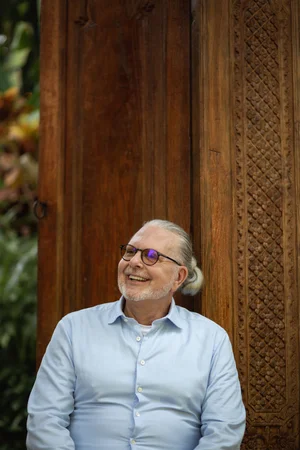
At The Place Retreats, our clients find a safe, supportive space to process their stress responses and anxiety. Founder and psychotherapist John-Claude Chalmet truly understands the transformation that occurs when we connect body and mind. Working with a team of experienced therapists, we gently guide our clients through the layers of their anxiety and underlying emotions to get at the core wound.
Surrounded by lush, tropical Balinese gardens, The Place Retreats is the perfect place to surrender yourself to a healing experience. When you’re ready to uncover and process your anxiety and emotional needs, we’re here for you.
Remember, you are not your thoughts, and you are not ‘too much’.
If you’d like more information on how one of our tailored retreats at The Place Retreats Bali can help you, contact us to schedule a free 15-minute consultation with a member of our team.